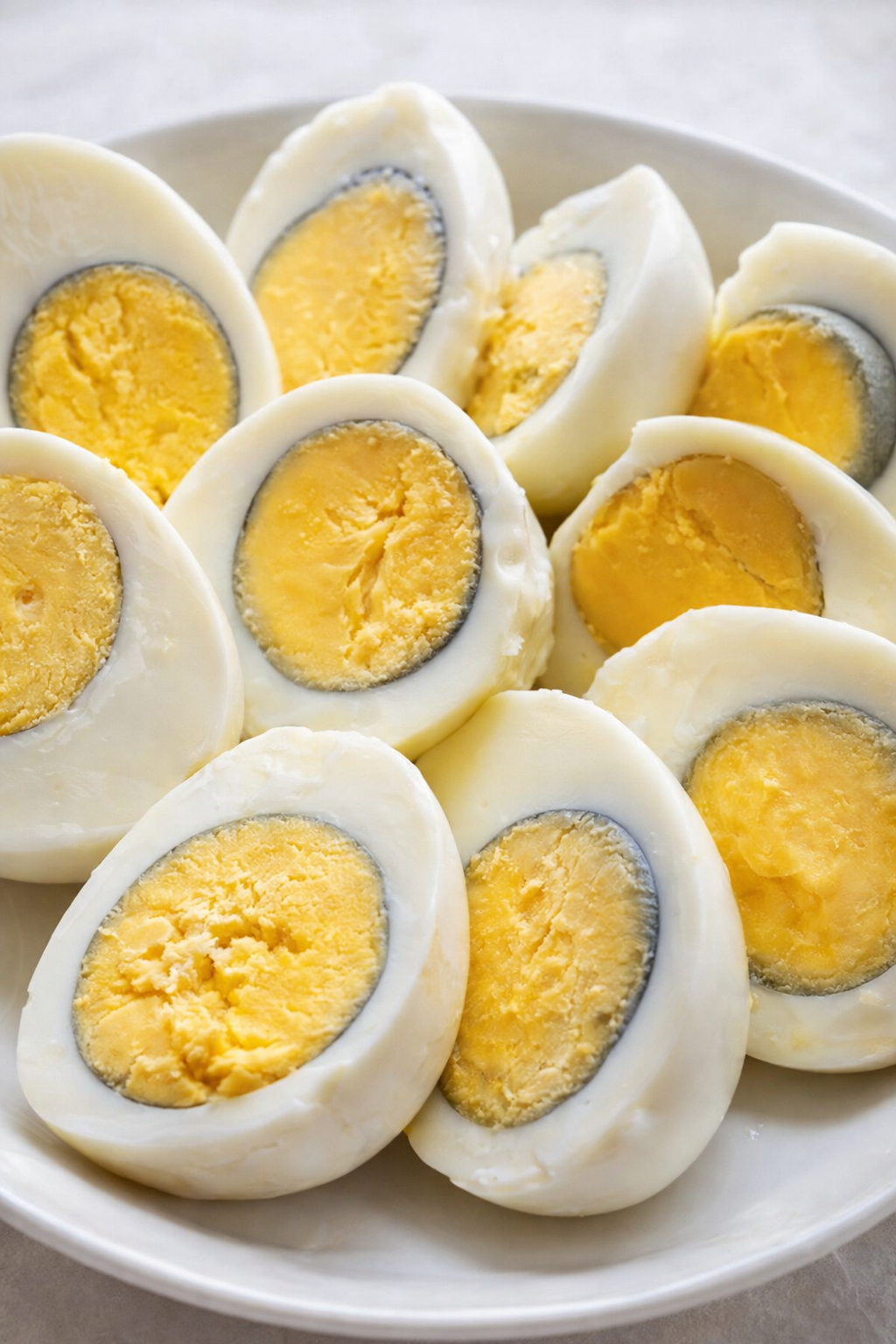
If you’ve ever sliced open a hard-boiled egg and noticed a greenish-gray ring around the yolk, you’re not alone. It’s a common kitchen mystery—and the good news is that it’s harmless. Here’s a clear, step-by-step explanation of what causes it and how to prevent it.
Step 1: What Is the Green Ring?
The green ring is a thin layer of discoloration that forms where the yolk meets the egg white. It can range from pale gray to greenish-green, depending on how long the egg was cooked and how it cooled.
Step 2: The Science Behind It (In Simple Terms)
Eggs contain:
- Sulfur (mostly in the egg white)
- Iron (mostly in the yolk)
When eggs are overcooked or cooked at too high a temperature, sulfur from the whites reacts with iron in the yolk. This reaction creates iron sulfide, which causes the greenish color.
👉 The longer and hotter the cooking, the more noticeable the ring.
Step 3: Is It Safe to Eat?
Yes—completely safe.
- The green ring does not mean the egg is spoiled
- It does not affect food safety
- The taste may be slightly drier, but the egg is fine to eat
It’s a cosmetic issue, not a health concern.
Step 4: Why It Happens More Often With Hard-Boiled Eggs
This discoloration is most common when:
- Eggs are boiled too long
- Eggs are left in hot water after cooking
- Eggs are not cooled quickly
Hard-boiled eggs are especially vulnerable because the yolk becomes fully firm, allowing the iron-sulfur reaction to occur.
Step 5: How to Prevent the Green Ring
Follow these simple steps for perfect hard-boiled eggs every time:
✔️ Proper Cooking Method
- Place eggs in a pot and cover with cold water
- Bring to a gentle boil
- Once boiling, turn off heat and cover
- Let sit for 9–12 minutes (depending on egg size)
✔️ Cool Immediately
- Transfer eggs to an ice bath right away
- Cool for at least 5 minutes
Rapid cooling stops the chemical reaction that causes the green ring.
Step 6: Does Egg Freshness Matter?
Yes, slightly.
- Older eggs tend to show the green ring more easily
- Fresh eggs have a slightly lower pH, slowing the reaction
However, cooking time and temperature matter far more than freshness.
Step 7: Why Some People See It More Than Others
Differences can come from:
- Altitude (water boils at different temperatures)
- Egg size
- Stove heat intensity
- Habitual overcooking
Even experienced cooks see it sometimes—it’s very common.
Final Takeaway
The green ring around hard-boiled egg yolks:
- 🟢 Is caused by a natural sulfur-iron reaction
- 🟢 Happens when eggs are overcooked or cooled too slowly
- 🟢 Is safe to eat
- 🟢 Can be prevented with proper timing and quick cooling
So next time you see that green tint, don’t worry—your egg isn’t ruined, just slightly overcooked.